No, Stankonia wasn't OutKast's first album.
I've told the story before about how I stumbled across OutKast. This track was particularly influential in converting me to a fan of their music. Keep in mind, in 1996 I think I spent more time watching Star Trek: The Next Generation on Fox (Yes, I'm a nerd. Deal.) than checking out videos on B.E.T. or MTV, so I had no idea there was a video for this. All I knew was that I had moved into a brand new neighborhood with peers who were both very foreign and oddly familiar, and this was a sample of my life's new soundtrack. Omarr was especially taken by "Elevators" and we used to crank it over and over on his living room sound system, along with whatever Mobb Deep album he was playing at the time.
This song was a gateway on my journey towards the discovery of hip hop. OutKast is incredible.
peace.
Showing posts sorted by relevance for query outkast. Sort by date Show all posts
Showing posts sorted by relevance for query outkast. Sort by date Show all posts
Thursday, May 26, 2011


Monday, February 21, 2011
Story Time with DJ Premier
from Complex magazine:
Without a doubt, DJ Premier is top-five dead-or-alive, one of the greatest hip hop producers ever, and your favorite producer's producer won't tell you any different. The Houston, Texas native's sound, which consists of chopped samples looped over crisply punched drums, and accented with a signature scratch chorus, hasn't changed much, but still fits as the perfect hip hop soundtrack for New York's Timberland-boots-certified street aesthetic.
Even after 22 years in the game, reports about his production credits possibly surfacing on the upcoming albums of everyone from Drake to Immortal Technique keep fans on their toes. His continuous relevance asserts that East Coast boom-bap sound is still beloved by many, and upcoming projects like the collaboration album with Pete Rock will only maintain the flame. With that said, to the jizzing joy of those who masturbate to MPC noises, we recently went to the legendary HeadQCourterz (formerly known as D&D Studios) in Manhattan to hear the master craftsman share anecdoetes behind some of his all-time classics...
More here.
I didn't know it at the time, but DJ Premier affected my perspective of hip hop in a way that made me feel validated in listening to street stories. Between the ages of 12 and 14, I didn't want anything to do with hip hop music. I thought it was too vulgar, too arrogant, or too violent, and I couldn't identify with the words I heard. I was also quite resistant to what was considered "popular". In some ways, I suppose I still am. Nevertheless, most of my musical taste then involved jazz and r&b, not hip hop.
Then came the summer before my junior year in high school. My brother was visiting home during his time stationed at Fort Benning in Georgia. And when he brought all his stuff in the house, I noticed this grey padded case he used for carrying his CD collection. I jumped on it, and I spent an entire night picking through his music in the hopes of something interesting. Two of the albums in that case claimed me, ATLiens by OutKast and The Score by The Fugees. I commandeered them for more scrutiny, and they were heavily rotated!
So here I am, I'm 16 years old and I'm thinking to myself, "Alright. I'm not really into hip hop, but I like this two albums. I'll just listen to them." And for a long while, that's what I did. Nothing else in hip hop mattered for me except The Fugees or OutKast. I listened to those two records over and over, and practically learned every single word on both. In fact, I'm pretty sure I could crank out 60-70% of either one on the spot. Those albums are ingrained in my body for the rest of time, I can assure you.
So this is where DJ Premier came in.
The year was 1997 and Jay-z's album In My Lifetime, Vol. 1 was released a few months into my OutKast/Fugees binge. EVERYBODY had it. The first single "Who You Wit" had already been spinning on the radio for some time by then and in September we got hit with the second one, "(Always Be My) Sunshine." So Jay was everywhere, all the time; I couldn't stand it. Like I mentioned earlier, I couldn't identify with much of what artists like Jay were saying. I was much more attracted to emcees who composed with a more cosmopolitan sense of the world; emcees like Dre or Lauryn.
But then I heard "...A Million and One Questions...""
I think I first heard this at my boy Omarr's crib. My first response was that I loved it. My second was how much I hated myself for loving it so much. Jay wasn't saying anything that was relevant to my life. He was promoting such misogyny and materialism. All I can remember thinking is how regressive his lyrics would be for black society and that he wasn't doing anyone any good. And I didn't care. It made a twisted sort of sense to me. There was something about the way this track moved that felt completely organic, completely embodied. I couldn't take my ears off of it.
It took many years for me to realize why I had this response. It had nothing to do with Jay's lyrics, but everything to do with DJ Premier's production. It felt as if he had awakened in me a musical experience that had been dormant for years; it had always been there, Premio just unveiled it for me to enjoy. I was instantly intoxicated, I just didn't know to what. At that time I had no interest to know who produced the song, so my addiction had no name.
For a long while after that, I had similar responses to other Premier-produced tracks like Mos Def's "Mathematics", Nas' "Nas Is Like", and D'angelo's "Devil's Pie." (Go youtubing!) I had no idea who it was making these beats, I just knew I loved these songs. So the first time I even saw his name was when I finally decided to check out the liner notes for Common's Like Water For Chocolate album to figure out why "The 6th Sense" had become my favorite song from my favorite emcee of all time. And there is was, "...produced by DJ Premier."
There he's been all along, making some of the best hip hop records of all time.
peace.
Monday, April 18, 2011
Who You Callin' Hip Hop?
Last night as I was looking through tracks for Mariana's album, I came upon this KRS-One interview from outside the VH1 Hip Hop Honors. Check out what he says about Kanye's Graduation album from around 1:36 to 2:15.
You know, this is such a fine line. On the one hand, Kris has been rhyming since before I was born. His world view is acutely viewed through the lens of hip hop culture, perhaps with more purity and vigilance than anyone else. In many ways, he has acquired the privilege to profess the values, beliefs, and thoughts of the entire community.
But in many ways, he hasn't.
Even with as influential KRS has been in solidifying hip hop's foundations, he cannot determine the definition of hip hop for an entire community. No one can. That responsibility is solely the duty of the collective and not a select few individuals, no matter their importance. So when Kris says, "We don't wear white shades around here," my first response is, "Who's included in 'we'?"
In 1998 Lauryn Hill won five Grammy Awards for The Miseducation of Lauryn Hill, including the top prize of Album of the Year. In her acceptance speech, Lauryn said, "This is crazy, because this is hip hop music." (I found it here!!!) And even though more than half her album was sung, she is absolutely right. That's the lens through which she views her world.
Six years later in the same category there were two hip hop albums nominated, Missy Elliot's Under Construction and OutKast's Speakerboxx/The Love Below. OutKast won the Grammy that year, with Dre's half of the project consisting of 95% singing, narration, and other types of musical explorations. In over two hours of music he only kicked two actual hip hop verses. But if I go to the record store to buy Speakerboxx/The Love Below, it's in the hip hop section. And that's right, because that's the lens through which they view their world.
So back to Kanye. If there could be any question of Kanye not having done a hip hop album it would most likely involve 808s and Heartbreaks, which was released in 2008. Kanye's almost exclusive use of the Roland TR-808 drum machine and Auto-Tune voice processing evolved into a minimalist and introspective journey of love, loneliness, and heartache. The sound was very electronica-inspired, Kanye sung on every track, and there was only one actual rap verse on the entire album (see "Amazing" feat Young Jeezy). Yet, even though this album is probably considered more of a crossover effort by most critics, at its core the heart of hip hop music still pulses. It won't be found in the "Pop" section of the Virgin Megastore. Kanye is hip hop through and through, and ultimately that's the lens through which he views his world. I think My Beautiful Dark Twisted Fantasy has served to solidify this.
So, I humbly disagree with KRS-One. His opinion of what's hip hop is not a deciding factor. It's only his opinion, albeit an experienced and educated one. Nevertheless, the forces of hip hop are much, much greater than that.
"Hip hop started out in the heart." Lauryn Hill
"I met a critic. I made her shit her drawers/
She said she thought hip hop was only guns and alcohol/
I said, 'Oh, hell naw! But yet it's that too.'" Dre
"What the hell do I know/
I'm just a Chi-town nigga wit' a Nas flow." Kanye West
I think if KRS would have used "I" instead of "we", I wouldn't have had anything to write about tonight. Thanks Kris!
peace.
Wednesday, December 7, 2011
The Rhymes of Our Lives
This is "Liberation" from OutKast's five-mic album Aquemini.
Since I have to be up at 7 a.m. tomorrow (again) I'll keep this short and sweet. I remember when I bought this album back in 1998. I had played OutKast's previous effort ATLiens like I was in search of the cure for cancer in Big Boi's lyrics, so I was primed for a new release from the dirty south duo. I eagerly slid this CD into the deck in my car and reveled in 'Kast's refreshing reinvention.
Everything was going just fine until I got to "Liberation". I was haunted by what I was hearing. Never had I witnessed a hip hop group take such risks on a record. It was impactful and mesmerizing in a whole new way.
And by the time they got to the end of Cee-lo's section, I was almost in tears. I love this song.
peace.
Friday, February 25, 2011
Hip Hop is Fearless
Just when I thought I'd gotten a handle on the whole hip hop thing, here come these cats.
I remember when OutKast's Aquemini album came out back in 1998. I had been anxiously awaiting its release. When I bought it, I put it in the cd player of my car and began listening to it everyday on my way to school. I hated it for about two weeks.
But it wasn't Outkast's fault. It was mine.
You see, anytime an artist makes a significant and extensive leap forward in statement or aesthetic, the folks who consume their work have difficulty fully integrating the new information. We need time to catch up. These cats go into their studios, theatres, and writing rooms and devote hundreds of hours to advancing their work. The good ones are taking huge risks and making real progress, inevitably cruising right on by the artistic sensibility of their audience. So it can be a challenge for us observers and commentators to stay on the leading edge of the movement. It absolutely requires us to be completely open and witness the work with the mind of a beginner.
That's why I'm completely enraptured by this video. These cats scare me, in a good way; not because they have masks on or sound like death metal rap. But rather, they are hip hop artists that are taking an extraordinary risk in the type of music they chose to make. Their risk challenges me to envision an entirely new avenue down which hip hop may travel. I'm excited to see where their journey takes them. I'll be checkin' for 'em.
Because Aquemini is a classic.
peace.
Monday, August 15, 2011
Watch The Throne: Not For Beginners
I was supposed to write this review two nights ago, but I had to decompress for a couple days after watching this. Go see it and you'll understand.
I've read comments and reviews from all over the map about this album. Some praise Jay and 'Ye's chemistry, some claim there is none. Half say Jay's lyrics were better, the other half claim Kanye got the nod. The Monday-morning quarterbacking goes on and on with no real consensus as to what we actually have on our hands here. After listening to this album for pretty much an entire week, all I have left to offer is one question and one observation. Let's take them in turn.
Question: What did you expect?
Did you expect Kanye's ear for production and composition to be anything less than stellar? If you did, then I'm very sorry to disappoint you. Because the production on this album is, quite simply, some of the best I've heard since OutKast released Stankonia. Given what I've been able to gather about their respective creatives processes, I have to assume Kanye took the reigns with most of the instrumental/accompaniment aspects of the project. And yes there was input from a laundry-list of great hip hop sound men like Q-Tip, Swizz Beats, The Neptunes, 88-Keys, RZA, and Pete Rock. But ultimately, the orchestration of this album's luscious and dense sonic landscapes feels much more like a continuation of Kanye's trajectory on "...Dark Fantasy" than Jay's on "Blueprint 3". There is a clear sense of experimentation on many of the tunes on the album, but that's to be expected. What's not experimental about two powerhouses of hip hop attempting to building cohesion from substantially dichotomous individual aesthetics?
Did you expect Jay not to rhyme about being rich? Did you expect 'Ye not to rhyme about being a genius? Have you been listening at all?
Jay's been rhyming about being rich since he was broke in 1995. The name of the record label he helped begin is called Roc-A-Fella Records. Like he said on "Jockin Jay-Z":
Haters like, "Hov, why you still talkin' money sh*t?"
'Cause I like money, b*tch!
And Kanye's had a high opinion of his brilliance since the beginning, even before his career firmly began. One of the emcees at the epicenter of Kanye's birth as a full-fledged artist is Talib Kweli. Last summer, Kweli was interviewed by hardknock.tv discussing the early stages of Kanye's thrust into hip hop stardom. Have a look here. This pretty much sums it up.
Having said that, the lyrical diversity on this album is much more than I expected. With tracks like "New Day", "Murder to Excellence", and "Made in America" Jay and 'Ye are exploring parts of their thoughts and experiences that could only be revealed with exceptional attention paid to their personal ethics and journeys through life. And it's not like these are throw away tracks. They embody all the energy, commitment, and engagement heard throughout the entire record.
'Ye is rhyming like the government is about to cut off his oxygen.
Jay is rhyming like he's speaking to the United Nations.
These cats are writing as boldly and aggressively as they ever have.
Did you expect a ton of guest artists? I know I did. I'm happy their were few, and employed for specific effect. Kudos to them for not going overboard here.
Did you expect this to instantly be a classic record? Perhaps it is, perhaps it isn't. I'm not quite sure yet. While I certainly believe ...Throne to be a wonderful work, I'm still having trouble putting all the pieces together. Right now the album feels to me like a collection of two or three brilliant individual projects, like Jay and 'Ye could have released three EPs over the course of a year rather than one LP all at once. And as I mentioned earlier, this is most certainly an experimental album. However, I will say this; I expect many great things to be born from their efforts; videos, tour dates, follow up albums. The more these two work, the more refined their focus. This is certainly a good beginning.
As for my observation...
I've been walking and riding around listening to this album for almost a week now. It's been a gorgeous summer in Philadelphia, beautiful people are jogging along the river, and the general feeling of August is quite palpable. However, as I've experienced this past week with ...Throne as my soundtrack, something simply didn't feel right.
At first I couldn't put my finger on it. I mean, beautiful summer weather and good hip hop music have always seemed to fit hand in hand. But somehow, this particular album struggled to fit the pace and rhythms of the season. It was as if I was driving on the interstate all alone in perfect comfort, but with some jackass riding in my blind spot. It must have taken me four days to figure it out, but I think I finally have a fix on it.
Summertime hip hop releases are usually reserved for the party rockin', licence plate-rattlin' mega-hit singles that pulsate through the community. Fat Joe had one with "Lean Back". Sean Paul sneaked up on us with "Gimme the Light". And do you remember Lumidee? I'll bet you don't. But do you remember this? I'll bet you do.
And that's just it. Summertime hip hop has always been pleasantly youthful and, honestly, a tad bit disposable. It's supposed to be. It's designed to expire in September, making room for the more controversial and introspective releases of the fall, winter, and spring. It's the parts of the year between summers where I feel classic albums best work their magic.
To illustrate this, I randomly picked 20 albums that have all been considered some of the best music to emerge from hip hop culture. Then I looked up the release date of each album, ignoring the year. I will list them all here.
The Fugees The Score - February 13
Boogie Down Productions Criminal Minded - March 3
The Notorious B.I.G. Life After Death - March 25
Public Enemy It Takes a Nation of Millions to Hold Us Back - April 14
Nas Illmatic - April 19
Ice Cube AmeriKKKa's Most Wanted - May 16
Pete Rock and CL Smooth Mecca and the Soul Brother - June 9
Jay-Z Reasonable Doubt - June 25
Eric B and Rakim Paid in Full - July 7
N.W.A. Straight Outta Compton - August 8
Lauryn Hill The Miseducation of Lauryn Hill - August 25
Black Star Mos Def and Talib Kweli are Black Star - August 26
The Notorious B.I.G. Ready to Die - September 13
A Tribe Called Quest The Low End Theory - September 24
Common Resurrection - October 25
OutKast Stankonia - October 31
Wu-Tang Clan 36 Chambers (Enter the Wu-Tang) - November 9
Beastie Boys Licensed to Ill - November 15
Snoop Dogg Doggystyle - November 23
Dr. Dre The Chronic - December 15
Out of 20 albums, only four of them were truly released during the summer. I'm not counting Miseducation and ...Black Star due to being released so late into August. Those are really autumn albums; that's the season in which they made their greatest impact.
Of course, I felt as if this could have been a fluke. How could it be that so few of the albums hip hop considers timeless are released in the summer? Additionally, the number of summer albums on this list equals 20%. So am I just fooling myself because the year can be equally divided into four parts? Would the next count add up to 25% and debunk my finding? So I picked twenty more classic albums, but I won't bother posting the list because my findings were exactly the same. Four out of 20 were summer releases, with the other 16 heavily weighted in the late fall and early spring. And yes, they were random. You're just gonna have to trust me.
Why am I saying all of this? Well, I believe Jay and 'Ye could have done themselves a favor and waited to release this album later in the year, perhaps mid-November or so. It's just not a summer album. Their risks are too large, the orchestration too rich, and the lyrics are too well crafted for the simple-minded feeling of summer. Watch The Throne is not an album for beginners, dummies, or folks with no sense of humor. Textually and aurally, there's simply too much to digest while the sun's out. No one's really going to turn on their brains until kids go back to school and the first blast of Arctic air comes rolling in from our neighbors to the north. And I feel the disparity and conflict seen in the various responses and reviews reflects this. No one knows what to make of it because they're all just thinking about getting out to the beach (including me!).
Personally, I'm just going to put this one away for a while and come back to it after I bleed my radiator. It's too dope for me right now.
peace.
Thursday, October 13, 2011
Open Mics
Complex Magazine has compiled the 50 best hip hop radio freestyles.
While some might argue that radio is now a dying medium, it's undeniable that the AM/FM dial was the first outlet to bring hip-hop to the masses. Starting in the early 1980s, pioneering DJs like Mr. Magic, Red Alert, the Awesome Two, and Lady B gave a voiceless community the chance to be heard, and inspired future generations to pursue rapping as their full-time occupation.
Since that time, many legendary hip-hop radio shows have sprung up around the world, and during those late-night or early-morning time slots a new art form was born: the radio freestyle.
Many of hip-hop's greatest beefs were spawned live and direct over the airwaves. In the pre-MP3 era, cassette copies of these one-of-a-kind performances passed hand to hand, cementing reputations, and becoming the stuff of legend. Nowadays it's all done digitally, but the objective remains the same-total domination, no mistakes allowed.
Since that time, many legendary hip-hop radio shows have sprung up around the world, and during those late-night or early-morning time slots a new art form was born: the radio freestyle.
Many of hip-hop's greatest beefs were spawned live and direct over the airwaves. In the pre-MP3 era, cassette copies of these one-of-a-kind performances passed hand to hand, cementing reputations, and becoming the stuff of legend. Nowadays it's all done digitally, but the objective remains the same-total domination, no mistakes allowed.
Read more here.
I'm usually not a fan of these lists ranking artists or performances, but this one seems uniquely appropriate. During the years when I began to discover my place within hip hop culture, the music was moving through an period of creative and cultural uncertainty. We were a few years removed from the golden era, caught in the spectacle of East Coast vs. West Coast, and witnessing a surge of material emerging from southern artists like OutKast and Goodie Mob. As I explored hip hop more and more, these freestyle sessions served to maintain hip hop's artistic underpinnings; freestyles are the roots that fend off the erosion of rap music's relevance.
There are plenty of stand out performances on this list. However, for me the most impressive clip is #47, Q-Tip and Black Thought's "Dilla Dedication" freestyles. Perhaps it due to this month's featured emcee, but I was especially taken by this performance. Additionally, Black Thought freestyles are less frequent than you may think, so it's great to hear him rhyme in this forum. And on that day, Tariq went absolutely berserk!
peace.
Thursday, November 24, 2011
The Rhymes of Our Lives (Thanksgiving Edition)
I am thankful to have heard this track.
There was a time before I bought the Soundbombing II compilation during which I only listened to two albums; The Score by The Fugees and ATLiens by Outkast. Once I realized hip hop could sound like this, I was hungry for more.
Thanks Com.
peace.
Monday, August 29, 2011
Emcee of the Month: Nas (Post-Hurricane Wrap-Up)
Allow me to briefly finish what I started.
As a fan of his work, I'll be the first to say Nas hasn't always secured the best production for his albums. He certainly has substantial highlights ("N.Y. State of Mind", "The Message", "Nas Is Like" to name a few), but there have definitely been moments of his career which suffered due to substandard instrumentation.
"Purple" is not one of those moments.
For me, the most unique element of this track is it's lack of a hook (or chorus to some). Hooks are the staple of hip hop songs, usually because they are the only words anyone can remember after a first listen. They are also the lyrics to which people outside of the culture tend to gravitate. I'll never forget a stroll I took on the campus of Louisiana State University through the tailgating festivities before a football games. I walked past one group of fans who were flying a purple and gold Confederate flag and listening to OutKast's Stankonia album. I watched with slacked jaw as they flailed and gyrated while singing along, chanting "I'm sorry Ms. Jackson!" Surreal.
I think it's actually quite daring for Nas to forego adding a hook on this track. The urge to "catchify" a hip hop song is significant, and many otherwise decent songs have been weakened with the addition of weak or unnecessary "hookage". With "Purple" Nas recognized the obvious density of what he's written and decided it was enough to carry the song. That type of commitment to one's message is difficult to play; ask any actor who has moments alone on stage. But because Nas has chosen to simplify this composition, his words become much clearer and more expressive.
I dig it.
peace.
Monday, January 17, 2011
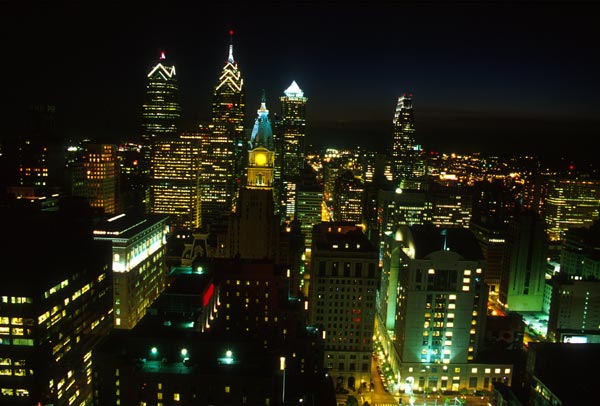
Drivin' 'Round the City at Night Music
Last night I was on my way home from work and thumbed my way to 808s and Heartbreak on my iPod. For the uninitiated, 808s and Heartbreak is the fourth studio album by Kanye West. Released in 2008, its prominent musical element was Kanye's extensive use of Auto-Tune added to a minimalist production style centered around the Roland TR-808 drum machine.
Skipping through the playlist, I landed on the eighth track on the album called "Street Lights". And as I listened, it was almost as if the song became the soundtrack of my ride home. The lyrics, the production, the atmosphere, everything about the song seemed specifically arranged for a midnight ride through the cold and quiet Philadelphia streets. It was so perfect in fact, that I set my iPod to single-song repeat and took the long(er) way home. I almost didn't want it to end.
This got me thinking. What makes a song good for riding through the city at night?
So I went through my catalog on iTunes and made a playlist with every song I could remember playing in my car to enhance my nighttime excursions. Here's what I came up with. I'm sure I'm missing something, so don't scold me:
Kanye West - Street Lights
Digable Planets - Pacifics
k-os - Heaven Only Knows
Mariah Carey - Fourth Of July
Common - A Filim Called (Pimp)
Lauryn Hill - Tell Him
Ladysmith Black Mambazo - Iyahlonipha Lengane
Lee Moses - California Dreaming
Gnarls Barkley - Who's Gonna Save My Soul
Little Brother - Nighttime Maneuvers
Outkast - Slum Beautiful
Common - The Game
Cee-Lo - Bass Head Jazz
Sade - Love is Stronger Than Pride
Buckshot LeFonque - Phoenix
Amel Larrieux - Infinite Possibilities
Phil Collins - In The Air Tonight
Daft Punk - Something About Us
Jeff Buckley - Lover, You Should've Come Over
Erykah Badu - Drama
Mos Def - Sex, Love And Money
Jamiroquai - Didjital Vibrations
Black Star - Respiration
There are a few common themes that I imagined would be prevalent; references to the night, dreams, the passage of time, and emerging or fading lights are abundant. There is also a general sense of introspection and reflecting upon past times or encounters. However, there were some aspects of the list that varied greatly. Tracks like Sade's "Love is Stronger Than Pride" and the aforementioned "Street Lights" by Kanye West feel very vaporous, very ethereal. Others, such as Cee-lo's "Bass Head Jazz" or Lee Moses' "California Dreaming" seem to carry considerably more weight and, at least to me, feel very dense and viscous. There's also quite a range of tempos here, from the soulful jazz ballad "Phoenix" by Buckshot LeFonque to the dark and penetrating Common cut "The Game".
So I offer these to you. If you get a chance, give them a try on your next evening automotive venture. What songs work best at stoplights? On highways and interstates? Surface streets? Do some feel better under a starry night? How about in rain? Or even snow? You may have limitless discoveries, or you may not dig any of them at all. Either way, it's all good! If you have some others you've found inspire you, feel free to share them in the comments of this post. I'm all about new music!
peace.
Monday, April 4, 2011
Holmes, smell ya' later!
Do you know the words to this?
I'm willing to bet you do.
In fact, I have a hypothesis about this. I wholeheartedly believe these are the most well-known rap lyrics in the history of hip hop. I've lived four states and two countries and spent significant time in many of the major cities in North America, and never have I come across someone who doesn't know at least half of this.
Now, before posting tonight, I had a wonderful debate with my homie Marcel (who also gave me some revisions for the No Wack Verses Club). He reckons that "Rapper's Delight" by Sugarhill Gang is more well known, especially the first chorus and verse of the song.
The conversation eventually shifted towards the significance of hip hop culture in the shaping of The Fresh Prince of Bel Air's narrative. But I think the jury is still out on the original premise as to which song is more well known.
I'll say this. "Rapper's Delight" came out at a time when hip hop wasn't really heard outside of a 50 miles radius of New York. And yes, it was the first hip hop track to get substantial airplay, but its entrance into the collective consciousness didn't really happen until about 10 years ago. In fact, it took an old white lady covering "Rapper's Delight" in the 1998 film The Wedding Singer before mainstream America realized how much they'd been affected by this song's success.
Conversely, The Fresh Prince theme was a much more immediate influence on how American pop culture viewed hip hop. Many people who had very little exposure to hip hop culture were able to tune in to this show and witness a relatively accurate (though extremely non-threatening) sample of the hip hop perspective. That peek into something new and unknown is one of the foundational aspects that allowed the show to be so successful. People who had never known any rap songs at least knew the words to The Fresh Prince theme. That was their way in.
One day I'll figure out a way to test this scientifically. How would I do that?
P.S. I think Ms. Jackson by OutKast and Baby Got Back by Sir Mix-a-Lot are up there, too. People in Louisiana flying confederate flags play those at tailgating parties. Crazy.
peace.
Thursday, August 11, 2011
The Rhymes of Our Lives
Yes. This track came out 15 years ago. If this song were a child, it'd be taking driver's education this year.
The Fugees album The Score, along with OutKast's ATLiens album, was one of the gateways through which I discovered a modern sense of my taste in hip hop. I've told the story here before a few times now.
This track was almost magical for me. The rhymes sounded like nothing I'd heard before. The instrumental sounded like nothing I'd heard before. And everyone was talking about this chick named Lauryn and how they thought she was so much better than the other two cats. Personally, I felt they complemented each other remarkably well. Even Pras (whose sense of rhyme could be best described as unorthodox, even for The Fugees) seemed to fit comfortably within the overall aesthetic. It really is a shame, at least for us humble fans, that Clef and Co. decided to go their separate ways in the late 1990s.
They were super-dope.
peace.
Sunday, January 16, 2011
Emcee of the Month: Asher Roth
I was bouncing around youtube tonight looking for some performance footage of Asher Roth and happened upon this video of Ash doing a cover of "Boom Boom Pow" by the Black Eyed Peas for BBC Radio 1. It's good. Ash and his crew, The Roth Boys (hmmm...), seem to be having a good time and making things fun for the listeners.
But more than that, Asher has allowed someone to record him and his crew doing a cover of another hip hop song. That got me thinking. I've seen artists like The Roots, Common, and Talib Kweli do bits of other artists' tracks in their live performances, but rarely do I see those bits recorded. Why is that? Why is it hip hop artists don't do recorded covers? I mean, there's this video, the In Tha Beginning...There Was Rap compilation album, Snoop's "Paper'd Up" (which was Eric B and Rakim's "Paid in Full"), and that's about all I can think of.
Perhaps it's due to the fear in the hip hop community of being criticized for borrowing and re-imagining a new idea, which is ironic because that's what hip hop beat makers have been doing since around 1974.
Or maybe it's simply a case of hip hop not having enough historical source material from which to sufficiently revisit an idea. But honestly, that would be a really lame excuse. There are dozens of memorable artists and memorable tracks from hip hop's past that I would love to hear rediscovered and reworked. Imagine OutKast doing their take on "I Left My Wallet in El Segundo" or Kanye West taking on a new "Planet Rock" project. How incredible would that be?
Best of all, projects like these would allow younger generations in the culture to continually be exposed to hip hop history in way that's more digestible. They won't feel they're being scolded for "not knowing their roots". They would have the opportunity to enjoy these songs with the same sense of discovery and excitement as those who were so fortunate to experience them at their inception.
I vote more covers in hip hop!
peace.
Tuesday, August 30, 2011
The Rhymes of Our Lives
The plates in Omarr's kitchen cabinets used to rattle when we played this at his crib.
GZA feat. Method Man "Shadowboxin'"
Along with Mobb Deep, The Fugees, and OutKast, various Wu-Tang projects stayed in rotation in the years I lived in the same neighborhood with my friends Omarr and Andre. I can't begin to tell you how many times we must have listened to "C.R.E.A.M.," "Bring the Pain," "Incarcerated Scarfaces," "Cold World," "For Heavens Sake," and countless other tracks from the various Wu-related albums. However, for me this particular cut seemed to embody everything that was essential to the Wu-Tang aesthetic. There's something about the incredibly ragged and muddy feel of RZA's production and the faint distortion of GZA and Method Man's vocal track that captured the purity of the Wu-Tang sound during this era.
Listening to this track in 2011 has illuminated something about RZA's work that I've barely noticed before now, his approach to sampling. The sample he used for this particular tune is from one of hip hop's favorite soul artists, Anne Peebles. Her song "Trouble, Heartache, and Sadness" is the foundational element of RZA's composition, providing the skeleton upon which he layers the drums and baseline. When I hear how Anne's voice becomes such a prime element of the instrumental, I recognize the artistic inspiration RZA provided for today big-budget producers such as Just Blaze, Kanye West, and the late J Dilla. Along with cats like DJ Premier, Pete Rock, Timbaland, and Dr. Dre, RZA should certainly be considered one of the pillars of hip hop production.
This track is the realest.
peace.
Subscribe to:
Posts (Atom)